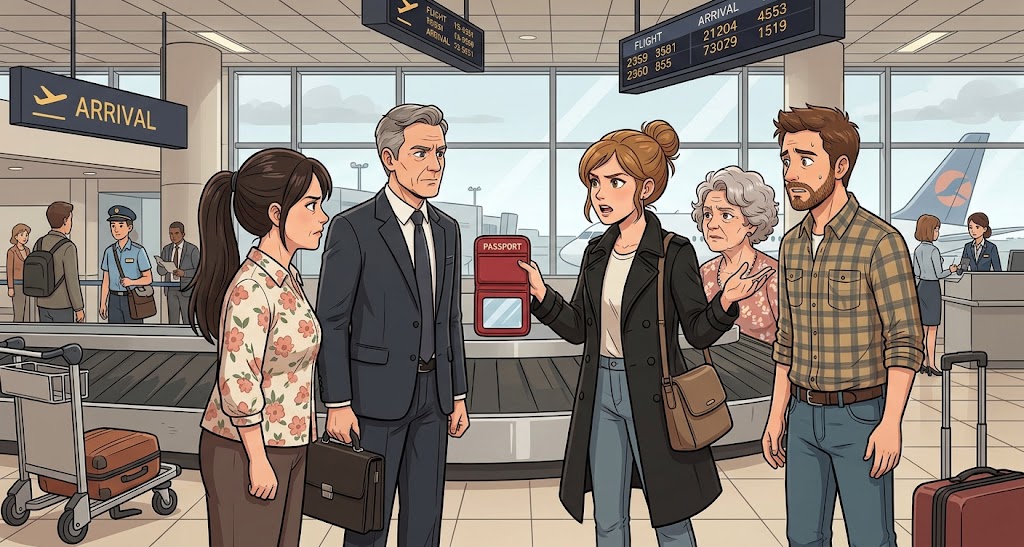
They had not simply left after an argument. They had taken my phone, travel documents, cash, and cards. They had canceled my transportation. They wanted me unable to contact anyone for a specific period of time.
I woke up in our Costa Rica vacation suite and knew something was wrong before I even opened my eyes.
The air-conditioning hummed softly. Tropical sunlight pressed through the curtains, laying bright gold stripes across the tile. Somewhere beyond the balcony, waves rolled toward the shore and birds called from the palms. It should have felt peaceful. Instead, the suite was so quiet that I could hear the small clock beside my bed ticking.
My family was gone.
At first, I assumed they had gone downstairs for breakfast. My mother liked arriving early enough to claim the best table, and my younger sister, Marigold, never missed a chance to photograph an untouched plate before anyone ate. Still, they would normally have made enough noise to wake the entire floor.
I pulled on a robe and stepped into the living room. Three coffee cups from the previous evening remained on the counter. My father’s reading glasses were gone. So were the two leather suitcases that had stood beside the entrance.
I knocked on my parents’ bedroom door. No answer. Their closet was empty. The hangers were lined up neatly, and even my mother’s travel cosmetics had disappeared from the bathroom.
Marigold’s room looked the same. The dresses she had spent an hour arranging by color were gone. Her phone charger was missing from the wall. There was no luggage, no makeup case, and no pair of sparkling sandals kicked carelessly beneath the bed.
Then I returned to my own room and reached for my phone.
It was not on the nightstand.
I checked beneath the pillows, inside the sheets, on the bathroom counter, and beside the balcony chair. Nothing. A tight pressure formed behind my ribs. I opened my travel bag and searched for the red document pouch I kept beneath a folded sweater. It contained my passport, emergency cash, two credit cards, and photocopies of my identification.
The pouch was missing too.
In its place, centered carefully on my pillow, was a sheet of hotel stationery.
My mother’s handwriting was unmistakable: precise, slanted, and elegant enough to look engraved.
“You are no longer part of this family.”
Below it, in Marigold’s looping handwriting, someone had added, “Enjoy having nowhere to go.”
I read both lines twice. I expected tears or panic, but neither came. What I felt was colder and clearer. It was the same stillness that settled over me at work when a routine financial review suddenly revealed a hidden risk.
My name is Lenora Hale. I was forty-eight years old and a senior risk analyst in Chicago. Companies hired me to examine complicated systems, identify weak points, and find the quiet decisions that could become expensive disasters. I had built my career by refusing to accept easy explanations.
Yet for most of my life, I had accepted every explanation my family gave me.
My mother, Sybil, was seventy-two and had spent decades selling luxury real estate. She understood presentation better than almost anyone. She could enter a room, study the people in it, and become exactly the woman they wanted to trust. At home, that charm had another purpose. It kept the rest of us orbiting her approval.
My father, Roland, was seventy-five and a vice president at Zenith Equities. His world consisted of polished shoes, private lunches, professional titles, and the board appointment he had pursued for years. He treated reputation like a second currency. In public, he was gracious. In private, he rarely opposed my mother if doing so might disturb the image of a successful family.
Then there was Marigold, my forty-two-year-old sister. She called herself a lifestyle creator. Our parents paid for her car, her apartment, her vacations, and the carefully staged life she presented online. Every problem she created became someone else’s responsibility. Usually, that someone was my father. Increasingly, it had become me.
I had chosen a different path. I worked through college, accepted the least glamorous assignments, saved consistently, and bought a modest home with money I earned. My independence should have made my parents proud. Instead, it made my mother restless because she could not direct it.
For years, I kept my distance. Then, three months before the Costa Rica trip, my father called.
His voice sounded tired. He said my mother had experienced several health concerns and had begun thinking about the years we had wasted. He wanted one family vacation, all four of us beneath one roof, with no arguments and no old grudges.
“Your mother misses you,” he said. “She just doesn’t know how to say it.”
I wanted to believe him. There is a small part of every overlooked daughter that keeps waiting for the day her family finally sees her. I had buried that hope beneath promotions, routines, and sensible boundaries, but it was still alive.
That hope was why I agreed.
The first two days at the resort were almost perfect. We ate beneath strings of warm lights. My father asked about my work. Marigold complimented my dress. My mother raised her glass and said she wanted a fresh beginning.
There were odd moments, but I explained them away. My mother asked which bank managed my trust. Marigold wanted to know whether I kept emergency cash while traveling. My father insisted on booking all four return flights through his account because he had loyalty points.
Three weeks before the trip, Sybil had also asked me to sign several family medical forms. She said they were precautionary documents in case she needed help while abroad. I skimmed the first pages and signed where small yellow tabs had been placed near the back.
At the time, I thought signing quickly was an act of kindness.
Standing barefoot in the empty suite, I began to understand that the kindness had been used as access.
I folded the note and slipped it into my robe pocket. Then I walked downstairs.
The lobby’s marble floor felt cool beneath my feet. A concierge named Daniel looked up and immediately noticed that something was wrong. I asked whether my family had left the hotel.
He checked the reservation and hesitated.
“They checked out shortly after four this morning,” he said. “A private car took three passengers to the airport.”
“Did they leave a message for me?”
His expression answered before he spoke. “No, ma’am.”
I asked him to check my return flight. Because my father had booked the tickets, Daniel had to call the airline. After several minutes, he covered the receiver and told me my reservation had been canceled by the purchaser.
That was the first moment the full design became visible.
I asked Daniel for the hotel courtesy phone and dialed a number I had memorized years earlier.
Sterling Cross answered on the second ring.
Sterling had once directed corporate security at my company. Now he ran an independent risk firm and remained the calmest person I knew. Years earlier, after an executive had been stranded during an overseas crisis, he made every senior analyst memorize an emergency phrase and response procedure.
“Crimson Anchor,” I said.
The warmth vanished from his greeting. “Location?”
I gave him the resort name and room number.
“Are you physically safe?”
“Yes.”
“Do you have your passport?”
“No. My family took it, along with my phone and financial cards. They canceled my flight.”
He paused for less than a second. “Stay in a public area. Ask hotel management to preserve corridor, lobby, and entrance footage from midnight onward. Do not accuse anyone through an unsecured account. I will arrange contact with the appropriate travel office and your bank.”
His precise instructions gave me something stronger than comfort: a sequence.
Daniel called the duty manager. The resort preserved the relevant recordings, issued me a temporary room key, and provided a computer in a private business office. Sterling sent a secure link that allowed me to verify my identity through questions and a backup authentication method.
I logged into my primary trust account.
The balance was lower by $120,000.
For several seconds, I stared at the transaction. It had been initiated the previous afternoon and directed to a luxury real estate escrow company in Austin, Texas.
Marigold had been talking about an Austin condominium for more than a year. She had shown us photographs at dinner: rooftop pool, private gym, glass balcony, concierge desk. My parents had refused to purchase it because they were already supporting her other expenses.
Apparently, they had decided I would purchase it instead.
I downloaded the transaction record. The authorization file included my signature, but it was attached to language I had never knowingly approved. The medical packet came back to me in fragments: the yellow tabs, my mother’s hand covering the headings, her urgency, my father’s insistence that I not delay.
I called Petra Alvarez, my wealth manager.
Petra was known for asking the question everyone else had overlooked. When I explained what had happened, she did not interrupt. She requested the transaction number, checked the settlement status, and returned to the line.
“The funds have not completed final settlement,” she said. “A transfer above one hundred thousand dollars from this trust requires secondary verification. Someone submitted a supporting confirmation, but the voice check was not completed through your registered number. We can place an immediate hold while the authorization is reviewed.”
My knees weakened with relief, but Petra was not finished.
“Lenora, listen carefully. Do not contact the receiving brokerage. Do not warn your family. I am opening a formal dispute and preserving every record. Send me the hotel note and anything showing that your identification was removed.”
I photographed the note with Daniel’s help and forwarded it through the secure portal. Hotel management supplied a written statement confirming the checkout time and the canceled reservation. Sterling arranged for a local liaison to accompany me while I reported my passport unavailable and began the emergency replacement process.
By noon, I was no longer a woman abandoned in a foreign country. I was the documented owner of a disputed account, following a controlled recovery plan.
My family, however, believed the plan had worked.
They had timed the early flight to reach Chicago before I woke. They expected me to spend hours persuading hotel employees to help me, then days trying to replace my identification. By the time I regained access to my bank, they believed the transfer would have settled and Marigold’s condominium would be under contract.
They had calculated my fear. They had not calculated my training.
Sterling soon found a second vulnerability in their plan. His firm provided international security audits for Zenith Equities, my father’s employer. He had a professional duty to report any incident involving a company officer, missing government identification, and possible misuse of financial documents.
He submitted a factual notice through the corporate compliance portal. He did not make conclusions. He listed dates, locations, hotel records, and the statement I had provided. Zenith opened an internal review and temporarily restricted my father’s executive access while it determined whether company devices or accounts had been involved.
That evening, my hotel room phone rang.
I knew it would be Roland before I answered.
“What did you do?” he demanded. “Two compliance officers came into my office. My access is suspended, and they are asking about Costa Rica.”
I activated the call-recording notice on the hotel system, which played an audible message to both sides.
“Where is my passport?” I asked.
“This is a family misunderstanding. Call your security friend and tell him to withdraw his report.”
“Where is my passport, Dad?”
My mother spoke in the background. “Tell her to stop being dramatic. Marigold needed the condo. Lenora has plenty saved.”
Roland lowered his voice, as if calmness could turn his words into reason. “Your mother has the red pouch in her handbag. We planned to return it after the property closing. Nobody intended to keep it permanently.”
“And the $120,000?”
“You never help your sister voluntarily,” he said. “We made a family decision. Now correct this before it affects my board review.”
For most of my life, that tone had made me question myself. That night, it sounded like evidence.
“Thank you for answering,” I said. “All further communication can go through Petra.”
I ended the call.
Within an hour, Petra had the recording. It confirmed three essential facts: my parents possessed the pouch, they knew about the transfer, and the removal of my documents was connected to the property closing.
The next morning, my mother began sending messages through the resort email address. The first said I had misunderstood. The second accused me of humiliating the family. The third claimed Marigold had experienced too much disappointment and deserved one beautiful thing.
Not one message asked whether I was safe.
I saved every one.
The emergency travel process took four days. During that time, the resort moved me to a smaller room and advanced basic necessities against a verified payment guarantee arranged by Petra. A staff member helped me buy clothes and sandals. The local liaison accompanied me to the relevant offices, where I completed forms, verified my identity, and explained how my passport had become unavailable.
Each step was slow, but the slowness gave me time to think.
For forty-eight years, I had confused endurance with loyalty. When Marigold failed to pay rent, I covered two months because my mother said family helped family. When my father needed research for a board presentation, I spent a weekend preparing it and received no acknowledgment. When I was promoted, they changed the subject to Marigold’s latest partnership. I kept offering more, convinced that generosity would eventually earn a place at their table.
Now they had shown me the truth in handwriting I could not explain away.
On the third afternoon, I sat beneath a shaded terrace and watched the ocean. A storm had passed offshore, leaving the sky intensely blue. I unfolded my mother’s note again.
“You are no longer part of this family.”
The sentence still hurt, but it no longer had power over my future. It was not a verdict. It was documentation of a decision she had made—and one I was now free to accept.
Petra called with good news. The transfer hold had become a formal reversal pending review. The Austin escrow company could not release funds or complete the sale. Marigold’s purchase deadline would expire unless another verified buyer supplied the money.
“They may pressure you when you land,” Petra warned. “Do not meet them alone.”
“I won’t.”
Sterling arranged to meet me at O’Hare. Petra would join him with a document inventory and a witness acknowledgment form. I did not know whether my family would appear, but I suspected my father’s employer had told him that returning my property was the fastest way to demonstrate cooperation.
When my flight reached Chicago, the city looked gray and familiar beneath the clouds. I walked through international arrivals carrying a small replacement bag and the temporary travel document that had taken four days to obtain.
Sterling stood near the barrier in a dark coat. Petra was beside him, holding a slim legal folder.
Twenty feet away stood my parents and Marigold.
My mother moved first. Her expression transformed into public concern with practiced speed.
“Lenora, thank goodness,” she said, opening her arms. “We have been worried sick.”
I stepped back before she could reach me.
“Please do not touch me.”
People nearby turned, but I kept my voice level. My father’s face tightened.
“There is no need to make a scene,” Roland said. “We came to apologize. You are home safely, so call Zenith and explain that this was confusion.”
Marigold stared at her phone. She looked less like a victorious buyer than someone waiting for a bill she could not pay.
I pointed to my mother’s cream-colored handbag.
“My red document pouch is inside. Place it on that table.”
Sybil glanced at Sterling and then at Petra. She understood, perhaps for the first time, that charm would not control the room. With unsteady hands, she opened the handbag, removed my pouch, and set it on a nearby table.
Petra asked my permission before examining the contents. Passport. Cash. Two credit cards. Photocopies. Everything was there.
“Please sign that these items were returned today,” Petra said.
My father refused at first. Sterling calmly noted the airport cameras, the hotel footage, and the recorded call in which Roland had identified the pouch’s location. Silence stretched between us.
Finally, my mother signed.
The woman who had once controlled every family gathering with a look could barely hold the pen steady.
“Now withdraw everything,” she whispered. “You have your things.”
“Returning what belongs to me does not erase what happened.”
“We are your parents,” Roland said.
“That made your choice more serious, not less.”
I collected the pouch and walked away with Sterling and Petra. Behind us, Marigold began asking my father what would happen to the condominium. His answer echoed across the terminal.
“Not here.”
Two days later, we met in a conference room at Petra’s law firm. My family arrived with an attorney who had apparently advised them to stop calling me directly. They expected a private settlement. My mother wore navy blue, her favorite color for appearing composed. My father brought a leather notebook and placed it squarely before him. Marigold wore sunglasses indoors until her attorney quietly asked her to remove them.
Petra began with a timeline.
She displayed the medical packet I had signed, the unrelated authorization inserted among the pages, the trust requirements, the incomplete verification, the hotel checkout record, the airline cancellation, the preserved security footage, the note, the emails, the airport return form, and the recorded call.
No single item told the entire story. Together, they left little space for invention.
My parents’ attorney asked for a private recess. Petra declined until she had explained the immediate financial consequences.
The $120,000 transfer had been reversed. The Austin escrow contract had expired. The brokerage had flagged the transaction for enhanced review. Any future attempt to move trust funds would require in-person authorization and two independent confirmations.
Marigold’s face changed first.
“So the condo is gone?” she asked.
Her attorney placed a hand near her notebook, signaling her to remain silent.
Petra continued. Zenith Equities had completed a preliminary review. Because my father’s conduct created a serious credibility concern for an executive entrusted with sensitive decisions, he had been removed from consideration for the board seat. His access remained restricted, and his employment status would be determined by the company.
Roland looked at me as if I had personally signed the company’s decision.
“You knew what that board seat meant to me,” he said.
“You knew what my passport and savings meant to me.”
“That is not the same thing.”
“You’re right. A board seat was something you wanted. My identity and money were mine.”
For once, he had no polished response.
Petra then addressed my mother. The disputed documents and inaccurate confirmation had been referred for formal review. Petra did not speculate about outcomes or use dramatic labels. She explained that Sybil could face significant civil and financial consequences, including responsibility for professional fees, travel costs, losses created by the canceled arrangements, and any additional expenses required to secure my accounts.
My mother’s composure began to slip.
“We were going to put Lenora’s name on part of the condo,” she said.
Marigold turned toward her. “You never told me that.”
“Because it was meant to be a surprise.”
“A surprise with no documents?” Petra asked.
Sybil looked down.
Their own story was separating under the weight of simple questions.
My family’s attorney requested ten minutes. This time, Petra agreed. They moved to a smaller room across the hall while Sterling, Petra, and I remained at the table.
“How are you feeling?” Sterling asked.
I considered the question. “Clear.”
When my family returned, their attorney offered a proposal. They would reimburse my travel expenses, sign a statement confirming that I had not approved the transfer, and return all copies of my financial documents. In exchange, I would ask the relevant parties to consider their cooperation and would refrain from discussing the matter publicly.
It was a practical framework. Petra had helped prepare a stricter version before the meeting. It included repayment of every documented expense, an independent examination of the devices used to submit the authorization, permanent removal of my parents from any medical or financial access, written no-contact boundaries, and acknowledgment that I retained the right to respond truthfully to any official inquiry.
My father read it and pushed the papers away.
“This treats us like strangers.”
I reached into my folder and removed the hotel note.
I slid it across the table until it stopped in front of my mother.
Her own handwriting faced her.
“You made us strangers before sunrise in Costa Rica,” I said. “This agreement simply records the boundary you created.”
Marigold began to cry. In another year, the sight might have softened me immediately. But I remembered her second line on the note and the photographs she had posted from the airport while I searched an empty room for my passport.
“I thought Mom would leave you a phone,” she said.
“You wrote that I should enjoy having nowhere to go.”
“I was upset.”
“You were on your way home using a ticket I helped pay for. I was barefoot in a hotel lobby.”
She wiped her eyes and looked at our parents, waiting for one of them to rescue her. Neither did.
Roland tried a different approach. He reminded me of holidays, school ceremonies, and the year he taught me to drive. He listed the ordinary duties of parenthood as though they created a permanent claim on my future.
I listened without interrupting.
When he finished, I said, “Good memories do not cancel deliberate choices.”
The room became completely still.
My mother finally signed the revised agreement. My father followed after a long conversation with his attorney. Marigold signed last, pressing so firmly that the pen left an impression on the pages beneath.
I stood, placed the hotel note back in my folder, and looked at the three people across from me.
“I spent my whole life trying to prove I belonged to this family,” I said. “I am done applying for a place that should never have required an application. Do not come to my home. Do not contact my employer. Any necessary communication goes through counsel.”
My mother opened her mouth, but I raised one hand.
“You already wrote your final message. I am accepting it.”
Then I left.
I expected the elevator ride down to feel triumphant. Instead, my hands began to shake as soon as the conference room doors closed behind me. For two hours, I had spoken with the controlled voice I used during difficult corporate reviews. Now the effort of holding myself steady caught up with me.
Petra guided me into an empty office and poured a glass of water. Sterling stood by the window, giving me enough space to breathe without leaving me alone.
“Did I go too far?” I asked.
The question embarrassed me the moment it left my mouth. My family had planned every step, yet I was still wondering whether protecting myself had been unkind.
Petra sat across from me. “You requested the return of your property, repayment of your documented expenses, accurate records, and distance. You did not ask for anything that belonged to them.”
Her answer exposed the pattern more clearly than any speech could have. I had been trained to interpret my family’s discomfort as proof that I had done something wrong. If my mother became upset, I apologized. If Marigold cried, I solved the problem. If my father grew cold, I worked harder to regain his approval.
That day, I let their discomfort remain theirs.
The first real test came before I reached home. My doorbell camera sent an alert while Petra was driving me from the law office. On the screen, my mother stood on my front steps holding a covered casserole dish. My father waited beside the car, looking impatiently toward the street.
Sybil rang the bell twice. Then she leaned toward the camera.
“Lenora, I know you are watching. We signed the papers. There is no reason we cannot speak like adults. I brought your favorite dinner.”
It was not my favorite dinner. It was Marigold’s.
Before Costa Rica, that mistake would have seemed small. Now it represented everything. My mother was not there because she understood me. She was there because a locked door offended her.
I saved the recording and sent it to Petra. She reminded their attorney of the no-contact provision. My parents left eight minutes later, taking the untouched dish with them.
At home, I noticed the evidence of my old habits everywhere. A spare bedroom held boxes Marigold had asked me to store “for a few weeks” three years earlier. My desk contained receipts for family expenses I had never been repaid. The kitchen calendar still marked my parents’ appointments because my mother expected me to remind her.
I did not clear everything in one dramatic afternoon. Recovery was quieter than that. I removed one appointment. I sorted one box. I placed the receipts in a file for Petra. Each small action returned a piece of my home to me.
A week later, the Austin brokerage requested a formal interview. Petra attended with me. The closing specialist explained that my mother had presented the transfer as an early distribution I had approved for Marigold. The brokerage had received copies of family photographs, a cheerful email apparently written in my name, and the signed page from the medical packet.
The cheerful email was especially revealing. It said I was “thrilled to help my baby sister finally have the home she deserved.” I would never have called a forty-two-year-old woman my baby sister in a financial message. Sybil had written the version of me she wished existed: endlessly grateful for the chance to provide.
The specialist showed us the scheduled closing documents. Marigold alone would have held title. My name appeared nowhere.
That ended my mother’s claim that they intended to share the property with me.
The brokerage cooperated fully, returned the held funds, and provided its records to the reviewing parties. Petra later explained that the strongest cases were not built from dramatic accusations. They were built from consistent facts supplied by people who had no reason to coordinate their stories: the hotel, airline, bank, brokerage, airport cameras, and my father’s own employer.
My mother had always relied on controlling the room. This time, there were too many rooms.
Meanwhile, relatives began calling. Sybil had told them I had canceled Marigold’s first home purchase over a minor disagreement. An aunt I had not spoken to in years left a voicemail asking why I could not be generous when I was “doing so well.”
I nearly called her back. Then I listened carefully to her wording. She knew about the condo but not the missing passport, canceled flight, altered documents, or emptied account. My mother had edited the story until my response appeared to be the offense.
With Petra’s approval, I sent one calm written reply to anyone who contacted me.
“The proposed purchase involved funds from my account that I did not knowingly authorize. My travel documents were taken, and my return reservation was canceled while the transaction was pending. The funds have been restored. I will not discuss the matter further.”
Most relatives did not answer. Two apologized. One cousin, Naomi, called and told me my mother had been asking family members for weeks whether I still used the same bank. That detail helped establish that the plan had begun well before the trip.
Naomi also reminded me of something I had forgotten. At a family dinner, Marigold had joked that by summer she would be living somewhere “Lenora could never take back.” Everyone laughed except Naomi. At the time, I assumed it was another vague boast for social media. In context, it sounded different.
I forwarded the information to Petra and then resisted the urge to investigate every old conversation. I already had enough truth to make my decision. Searching endlessly for one more piece would have kept my life tied to theirs.
The second test came when my father’s assistant, Elaine, contacted me privately. She had worked with Roland for eleven years and sounded exhausted.
“He says the company review happened because you wanted revenge,” she said. “I thought you should know the review found unrelated problems too. Approval records were incomplete on several accounts. Your report did not create those issues. It caused the company to look.”
I thanked her but asked her not to share confidential details. After the call, I sat in my kitchen and absorbed the distinction. My father’s career had not been balanced on my silence. His own shortcuts had weakened it. The Costa Rica incident had merely removed the curtain.
For years, my parents taught me that consequences came from the person who spoke about a problem, not from the person who created it. That belief had kept every family secret safely buried. Once I stopped accepting it, their entire system lost its foundation.
Thirty days after the conference-room meeting, Petra confirmed that every requirement in the agreement had been completed. My expenses were repaid from my parents’ personal account. A neutral technology specialist verified deletion of the copied financial files. The original medical packet was surrendered. Written corrections were sent to the brokerage and financial institutions.
There was one final document for me to sign: acknowledgment that the required corrective actions had been completed. Signing did not erase official records or prevent independent reviews. It simply closed the private financial dispute.
I held the pen above the page and felt an unexpected sadness.
The agreement was proof that I had protected myself. It was also the closest thing I would ever receive to an honest family accounting. Every numbered paragraph existed because a person who claimed to love me had crossed a boundary and then denied it.
I signed anyway.
Closing a matter is not the same as pretending it never happened. It means refusing to let it occupy every day that follows.
The consequences unfolded over the following months. The reversed transfer restored my savings. My travel costs and professional fees were reimbursed. My accounts were rebuilt with stronger controls, and every old family access point was removed.
Zenith Equities made its own independent decision about my father. He left the company before the end of the quarter and did not receive the board appointment. The country club circles he had valued grew suddenly quiet. People who once returned his calls within minutes began taking days.
My mother discovered that social influence could not repair documented conduct. Former clients heard only that she was involved in a serious financial dispute and began keeping their distance. She blamed my father for admitting too much on the recorded call. He blamed her for designing the plan.
Marigold lost the Austin condominium and moved back into my parents’ guest room. Without the property she had planned to feature online, several promised collaborations disappeared. For the first time in her adult life, she had to confront the difference between a curated image and a stable life.
None of that brought me joy in the simple way people imagine consequences will. There was satisfaction in seeing the truth recognized, but there was also grief. I was not mourning the family I had lost in Costa Rica. I was mourning the family I had spent decades hoping they might become.
That grief required its own recovery.
I began seeing a counselor who helped me understand how often I had been assigned the role of capable rescuer. Because I rarely needed help, my family treated my strength as an unlimited resource. Every boundary became selfishness. Every refusal became betrayal. Every success became evidence that I could afford to surrender more.
I learned that being capable did not make me responsible for everyone else’s choices.
I changed the locks on my home, not because I expected them to arrive, but because the action made the boundary physical. I removed my parents as emergency contacts. I updated my estate plan. I gave Petra written instructions that no request involving my family was to be processed without direct, in-person confirmation.
Then I did something smaller and more important: I started building a life that was not organized around anticipating their next crisis.
I joined a Saturday walking group along the lake. I accepted invitations I once declined because my mother might call. I traveled again, first to a quiet inn in Wisconsin and later to Vancouver with two friends from work. On the second trip, I woke before sunrise and realized I had slept all night without checking whether my passport was still beside me.
Six months after Costa Rica, an envelope arrived at Petra’s office. It contained a four-page letter from my mother.
Sybil wrote about her childhood, her fears, and the pressure she felt to keep Marigold secure. She described the transfer as a desperate family solution that had become “misunderstood.” She said she missed me and wanted to meet for coffee.
What the letter did not contain was a direct acknowledgment of the morning she left me without identification or transportation. It did not mention the note. It did not say she was sorry for choosing a property closing over my safety.
I did not answer.
A month later, Marigold sent Petra a shorter message. She said living with our parents had become unbearable and asked whether I could help her with a rental deposit. The request was so familiar that I almost laughed. Even after everything, she saw my boundary as a delay, not an answer.
Petra replied with one sentence: Lenora is not available to provide financial assistance.
My father never apologized. He sent a formal statement accepting the agreement and then disappeared into silence. Of the three of them, his response was the easiest to understand. He had built his identity around authority, and he could not speak to me without acknowledging that his authority had ended.
One year after the trip, I returned to Costa Rica.
Friends questioned the choice, but I did not want the country to remain the setting of my family’s last decision. I booked my own flight, reserved my own room, and stored digital copies of every travel document in a secure account. Petra joked that I had created the most thoroughly controlled vacation in history.
Daniel still worked at the resort. When he recognized me, his face brightened.
“You came back,” he said.
“I wanted a different ending.”
This time, I woke to the sound of the ocean without fear. My phone was charging beside the bed. My passport was secured in the room safe. No note waited on the pillow.
I walked down to the beach just before sunrise. The sand was cool, and the horizon slowly changed from violet to gold. I thought about the woman who had stood barefoot in the lobby a year earlier, holding a sheet of stationery and believing she had lost everything.
She had not lost everything.
She had lost an illusion.
The savings were restored. The documents were returned. The professional consequences belonged to the people whose decisions had created them. But the most valuable recovery was quieter: I no longer needed the approval of people who measured my worth by what they could obtain from me.
Family is not permission to ignore consent. Love is not a debt that one person can collect from another. Generosity offered freely is beautiful; generosity extracted through guilt is control wearing a pleasant name.
I still keep my mother’s note, sealed in a folder with the other records. I do not read it when I am angry. I read it when nostalgia tries to rewrite the past. It reminds me that boundaries were not the cause of the separation. They were my response to it.
That morning on the beach, I watched the sun rise completely above the water. Then I returned to the resort, ordered breakfast for one, and sat at the best table on the terrace.
For the first time in my life, being alone did not feel like rejection.