PART 3: THE SECRET ACCOUNT THAT EXPOSED MY FATHER
My father stared at the phone in Desmond’s hand as if it were something dangerous.
“Dad,” I repeated, “why is your signature on an account opened in my name?”
For several seconds, he couldn’t answer.
Then Ranata did something strange.
She laughed.
It wasn’t a happy laugh. It was sharp, nervous, and completely out of place.
“Oh, come on, Fay. You’re acting like Dad committed some terrible crime.”
I turned toward her.
“Then explain it.”
She crossed her arms.
“Families help each other. Sometimes paperwork gets complicated.”
“Paperwork?” I repeated. “Someone used my identity without my permission.”
Dad finally raised his hand.
“Enough, Ranata.”
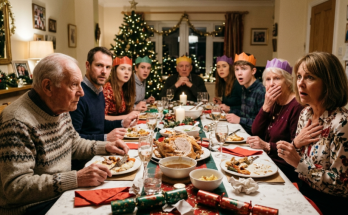
The room went silent.
He removed his glasses and rubbed his forehead.
“Fay, I need to tell you something. And I don’t think you’re going to forgive me.”
My stomach tightened.
“Try telling me the truth first.”
He looked toward Mom.
She was crying quietly into a tissue.
“About twelve years ago,” Dad began, “Ranata came to me with documents. She said you were trying to qualify for agricultural financing but couldn’t get approved without a second signer.”
I stared at him.
“I never applied for agricultural financing.”
“I know that now.”
“What did you sign?”
His voice dropped.
“An authorization form. She told me it would allow her to handle payments on your behalf.”
I looked at Desmond’s phone again.
The account had been opened eleven years earlier.
And over that period, more than $430,000 had passed through it.
My parents had supposedly contributed $286,000. Another $175,000 loan had been issued in my name.
The figures didn’t add up neatly, but one thing was obvious.
Someone had built an entire financial operation around a woman who knew nothing about it.
“Where did the rest of the money go?” I asked.
Nobody answered.
Then Desmond spoke.
“Into our house.”
Ranata’s head snapped toward him.
“Shut up!”
He ignored her.
“Three years ago, we paid off our mortgage. Ranata told me she’d received money from an investment her grandfather left her.”
I remembered their celebration dinner.
Ranata had raised a glass and announced that hard work always paid off.
She’d looked directly at me when she said it.
Now the memory made my stomach turn.
“Was there ever an inheritance?” I asked.
Desmond shook his head.
“Not that I can verify.”
Dad gripped the table.
Mom whispered, “We paid off their house?”
Ranata suddenly burst into tears.
“You don’t understand! I had bills! Desmond’s business was struggling, and nobody cared!”
Desmond stepped backward.
“My business was never struggling, Ranata.”
Her tears stopped almost instantly.
He continued, “You told me your parents were having financial problems. You said you were helping them.”
I stared between them.
She had told every person in that kitchen a different story.
My parents thought they were saving me.
Desmond thought his wife was supporting my parents.
And I had spent fifteen years believing my family simply looked down on my lifestyle.
Then Dad asked the question that finally broke her confidence.
“Ranata, did you forge Fay’s signature?”
She looked toward the doorway.
“I’m not answering that.”
Dad stood.
“Did you?”
“I said I’m not answering!”
He slammed his palm against the table.
“THAT IS MY DAUGHTER’S NAME!”
Mom flinched.
I’d never seen my father lose control like that.
Ranata backed away.
“You’ve always loved Fay more,” she whispered.
I almost couldn’t believe what I was hearing.
“For fifteen years,” I said quietly, “you convinced our parents I was a failure. You took their savings, used my name, and made me look irresponsible. And you’re standing here saying I was the favorite?”
Her face twisted.
“You don’t know what it’s like being compared to you!”
I stared at her.
“Compared to me? You spent fifteen years telling everyone I couldn’t even afford a decent truck.”
“Because you never cared what people thought!” she shouted. “You could walk into a room wearing dirty boots and still have everyone asking about your farm. I worked twice as hard to be noticed!”
There it was.
Not a financial emergency.
Not some desperate attempt to help her family.
Resentment.
She couldn’t stand that I was comfortable being myself.
And she’d spent years punishing me for it.
I closed the folder.
“I’m leaving.”
Mom reached for my hand.
“Fay, please. We can fix this.”
I looked at her tired face.
“I love you, Mom. But you can’t fix fifteen years of lies in one evening.”
Dad followed me toward the front door.
“Fay, what happens now?”
I stopped.
“Tomorrow, my attorney will begin reviewing the documents. We’ll contact the banks, dispute anything opened without my authorization, and find out where every dollar went.”
He nodded slowly.
“And Ranata?”
I looked back into the kitchen.
She was standing alone, her expensive handbag hanging from one arm, suddenly looking much smaller than she had an hour earlier.
“That depends on what the evidence shows.”
I drove home without turning on the radio.
For the first time since selling my farm, I didn’t think about the $39 million.
I thought about my parents.
Their retirement savings.
The sacrifices they’d made.
And the years they’d spent believing I was quietly drowning in debt.
At 11:43 that night, my phone rang.
It was Desmond.
“Fay, I’m sorry to call so late, but I found something.”
“What?”
“I went through the financial documents Ranata kept in our home office.”
I sat up.
“And?”
“She has a storage unit. She’s been paying for it for eight years. I found the rental agreement inside a folder marked ‘Farm Records.’”
“Why would she need a storage unit?”
“I don’t know. But there’s something else.”
His voice lowered.
“The agreement lists you as the primary renter.”
My blood ran cold.
“I’ve never rented a storage unit.”
“I know. And Fay… the emergency contact isn’t me.”
“Who is it?”
He hesitated.
“Your father.”
I closed my eyes.
Another document.
Another signature.
Another secret involving Dad.
The next morning, I called my attorney, Caroline Mitchell, and explained everything.
She listened without interrupting.
Then she said, “Fay, don’t confront anyone else until we’ve preserved the evidence. Whatever is happening, we need proper documentation.”
By noon, Caroline had arranged for us to meet at her office with the records Desmond had found.
The storage agreement was among them.
Unit 214.
A facility thirty minutes outside town.
Eleven years of payments from an account linked to my identity.
But what caught Caroline’s attention was the description attached to the unit.
“Business archives and original property records.”
She looked up.
“Fay, where are the original documents from when you purchased your farm?”
“At home. Most of them.”
“Most?”
I thought for a moment.
“There was an original survey that disappeared during an office renovation years ago. I always assumed I’d misplaced it.”
Caroline’s expression changed.
“What kind of survey?”
“The original boundary survey from when I purchased the eighty acres.”
She became very still.
“Did Ranata ever have access to your office?”
I remembered something.
Twelve years earlier, I’d been hospitalized for four days after a serious riding accident.
Ranata had offered to collect my mail and take care of a few things around the house.
I’d given her a spare key.
And although I’d gotten that key back, I’d never considered what she might have copied.
“Yes,” I whispered. “She did.”
Caroline folded her hands.
“Then we need to be careful. A storage unit containing original property documents could be important, especially after a sale this large.”
At 2:15 that afternoon, Dad called.
His voice sounded strained.
“Fay, are you at home?”
“No. Why?”
“Ranata came by this morning. She wanted the old papers from my filing cabinet.”
I sat upright.
“Did you give them to her?”
“No. I told her your attorney needed to see everything.”
I released a breath.
Then Dad said something that made my heart pound.
“She got angry. She said if you kept digging, you’d find something you wouldn’t want to know about the farm.”
I gripped the phone.
“What exactly did she say?”
Dad swallowed.
“She said the land was never supposed to belong entirely to you.”
For a moment, I couldn’t speak.
That property had been mine for fifteen years.
I’d bought it.
Paid the taxes.
Maintained it.
Negotiated the sale.
And every attorney involved in the transaction had reviewed the ownership records.
What could Ranata possibly mean?
I called Caroline immediately.
She listened carefully.
Then she said, “Fay, bring me every original purchase document you have. We’re going to compare them with the county records.”
That evening, Caroline called again.
This time, her voice was different.
“Fay, I found a document recorded eleven years ago. It’s not part of the ownership chain used in your sale, but it refers to your property.”
My heart began racing.
“What kind of document?”
“A private agreement. It appears to promise your sister a financial interest connected to the farm.”
I stood frozen in my kitchen.
“But I never signed anything like that.”
“I know. The signature needs to be examined. And there’s another problem.”
“What problem?”
“The agreement contains a clause involving the future sale of the property.”
I gripped the edge of the counter.
“What does it say?”
Caroline took a breath.
“It claims that if the farm is sold, Ranata is entitled to forty percent of the proceeds.”
Forty percent.
Of thirty-nine million dollars.
I couldn’t even process the number.
Caroline continued, “That doesn’t mean the claim is valid. We have strong reasons to question it. But someone may try to use this document against you.”
I stared at the brown folder sitting on my kitchen table.
For fifteen years, Ranata had taken money in my name.
Now she apparently had a document designed to take something much bigger.
Then Caroline asked a question that made everything worse.
“Fay, did your father ever witness a property agreement between you and your sister?”
“No.”
“Because his signature is here too.”
I sank into a chair.
And just as I was trying to understand what she’d said, another call appeared on my screen.
Ranata.
I answered.
Her voice was calm.
Too calm.
“Fay, I think it’s time we discuss the money from your farm.”
I said nothing.
Then she spoke the words that made my blood run cold.
“You can give me what I’m owed privately, or I can make sure your buyer finds out about the agreement.”
I looked toward my front window.
A black SUV was parked across the road.
Its headlights were off.
Someone was sitting behind the wheel.
“Ranata,” I whispered, “where are you right now?”
She laughed softly.
“Closer than you think.”
Then the call ended.
And at that exact moment, someone knocked three times on my front door……….
TO BE CONTINUED IN PART 4…
PART 4- Three days after selling my $39 million farm, I overheard my sister lying about me.
PART 4: THE DOCUMENT THAT COULD DESTROY EVERYTHING
The knocking came again.
Three slow, deliberate knocks.
I stood frozen in my kitchen, staring at the front door while the black SUV remained parked across the street.
My phone was still in my hand.
Ranata’s final words echoed through my mind.
“Closer than you think.”
For the first time in fifteen years, I was genuinely afraid of my own sister.
I stepped away from the window and called Caroline.
“Someone’s at my door,” I whispered. “And Ranata just threatened me.”
“Don’t open it,” Caroline said immediately. “Can you see who’s outside?”
I switched on the porch camera.
A man in a charcoal-gray suit stood beneath the porch light, holding a large envelope.
He looked directly into the camera.
“Ms. Bennett? My name is Thomas Reed. I’m an attorney representing your sister. I have documents to deliver.”
My stomach tightened.
Caroline heard him through the phone.
“Tell him to leave the envelope. Don’t discuss anything.”
I spoke through the doorbell speaker.
“Leave it on the porch.”
The man hesitated.
“Your sister would prefer that we resolve this privately.”
“Then she should have called my attorney.”
His expression changed.
He placed the envelope beside my door and walked toward the SUV.
I watched until the vehicle disappeared down the road.
Only then did I retrieve the envelope.
Inside was a formal demand letter.
Ranata wanted $15.6 million.
Exactly forty percent of my farm sale.
And according to the letter, I had seventy-two hours to respond before she pursued legal action.
But the most disturbing part wasn’t the amount.
It was the attached agreement.
The document contained my name, my supposed signature, and a date from eleven years earlier.
Below it was my father’s signature as a witness.
I photographed every page and sent everything to Caroline.
Ten minutes later, she called.
“Fay, there’s something wrong with this document.”
“What?”
“The agreement claims you signed it on September 18, fifteen years ago.”
I frowned.
“And?”
“Look at the bottom. The electronic document information references a software version released years after that date.”
I stared at the page.
“Are you saying it’s fake?”
“I’m saying we have a serious inconsistency. We need a forensic examiner before making a formal allegation.”
I sat down slowly.
Someone had apparently created a document to steal millions from me.
And they’d been careless enough to leave a clue.
The following morning, Caroline and I met with a forensic document examiner named Victor Hayes.
He examined the agreement carefully, comparing it with verified signatures from my original farm purchase documents.
After nearly an hour, he placed two signatures side by side.
“Ms. Bennett, look at the letter F.”
I leaned forward.
“The curve is different.”
“Correct. And notice the pressure pattern. Your authentic signatures have natural variations. The questioned signature appears unusually consistent with a copied example.”
Caroline folded her arms.
“Can you determine whether it was forged?”
“I can provide an expert opinion after examining the originals. But there are enough irregularities to warrant a full investigation.”
Then Victor examined my father’s signature.
He frowned.
“Interesting.”
“What?” I asked.
“This signature appears to be genuine.”
My chest tightened.
“So Dad really signed it?”
“Possibly. But signing as a witness doesn’t necessarily mean he understood what he was witnessing.”
I wanted to believe that.
I desperately wanted to believe that.
But every new discovery seemed to bring me back to the same question.
How much had my father known?
That afternoon, I drove to my parents’ house.
Dad was sitting alone at the kitchen table.
The moment he saw the agreement, his face drained of color.
“Where did you get this?”
“Ranata’s attorney delivered it last night.”
He stared at the signature.
“Dad, did you sign this?”
His hands began shaking.
“Yes.”
I felt as though the floor had shifted beneath me.
“Why?”
He swallowed.
“Because Ranata told me it was an agreement to protect your farm if something happened to you.”
I looked at him.
“Protect it from what?”
“She claimed you were worried about creditors. She said she needed to be listed as someone who could help manage the property in an emergency.”
I closed my eyes.
“Dad, why didn’t you ask me?”
His voice cracked.
“Because she said you’d be furious if you knew she’d told us about your financial problems.”
For a long moment, neither of us spoke.
Then Dad reached across the table.
“Fay, I believed I was helping you.”
I pulled my hand away.
“I believe that you thought you were helping. But you trusted Ranata’s version of my life more than you trusted me.”
His eyes filled with tears.
“I know.”
It was the first time he’d admitted it without making excuses.
Before I left, Dad opened his desk drawer.
“There’s something I should have given you years ago.”
He pulled out an old photograph.
It showed me standing beside my first tractor, smiling in front of the farmhouse on the day I’d purchased the land.
On the back was a handwritten message.
For Fay. May this land give you the independence you’ve always deserved.
The handwriting belonged to my late grandfather.
I stared at the photograph.
“Grandpa wrote this?”
Dad nodded.
“He was proud of you. More than you knew.”
I remembered Grandpa helping me repair fences during my first summer on the property.
He’d always told me that independence was worth more than appearances.
But Dad wasn’t finished.
“He also left something in his papers that I never understood.”
He handed me a small folded note.
It contained an unfamiliar name.
Eleanor Price.
And beneath it, five words.
Ask her about the survey.
I looked up.
“What does this mean?”
Dad shook his head.
“I don’t know. But your grandfather told me to keep it safe.”
That evening, Caroline searched for Eleanor Price.
Within twenty minutes, she found her.
Eleanor had been a licensed land surveyor in our county for more than thirty years.
And according to the records, she’d worked on my property shortly before I purchased it.
Caroline arranged a meeting for the following morning.
Eleanor was seventy-four, with silver hair and sharp eyes that seemed to notice everything.
When I showed her Grandpa’s note, she went completely still.
“Where did you get this?”
“My father.”
She studied the photograph of my grandfather.
Then she whispered, “I wondered if this day would ever come.”
My pulse quickened.
“What day?”
“The day someone finally asked why the original survey disappeared.”
Caroline leaned forward.
“Ms. Price, what do you know?”
Eleanor opened an old leather briefcase.
Inside were yellowed maps, property records, and a sealed envelope.
“Fifteen years ago, your grandfather contacted me privately,” she explained. “He’d noticed discrepancies between the recorded boundaries and an older survey.”
I frowned.
“What discrepancies?”
“There was a narrow section of land near the eastern boundary. It had been excluded from an early commercial assessment, even though the historical records suggested it belonged within your parcel.”
I stared at her.
The eastern boundary.
That was the section the development company had been particularly interested in.
Eleanor continued, “Your grandfather wanted the issue resolved before you purchased the farm. We completed a corrected survey, and the ownership records were eventually brought into alignment.”
Caroline asked, “Why would anyone want the original documents?”
“Because they showed exactly when the correction happened and who had been notified.”
My stomach tightened.
“Who was notified?”
Eleanor removed a letter from the envelope.
It was addressed to my grandfather.
And copied beneath his name was someone else.
Ranata Bennett.
I stared at the page.
“Why was my sister involved?”
Eleanor sighed.
“She had accompanied your grandfather to one of our meetings. She said she was helping the family review the purchase.”
I remembered Ranata offering to help Grandpa with paperwork that summer.
At the time, I’d thought she was simply being thoughtful.
Eleanor continued.
“Your grandfather became concerned because your sister kept asking whether correcting the boundary would make the property more valuable in the future.”
Caroline looked at me.
“Fay, this may explain why Ranata became interested in your farm long before the company approached you.”
My hands went cold.
Eleanor unfolded another document.
“This is the original corrected survey. I kept a certified copy.”
For the first time in days, I felt something resembling relief.
The document Ranata might have been hiding in that storage unit wasn’t our only evidence.
But then Eleanor said something that made me forget about the survey entirely.
“Your grandfather also asked me to document a conversation.”
“What conversation?”
Eleanor’s expression darkened.
“Your sister told him that since you’d bought the farm with your own money, it wasn’t fair that she would receive nothing if the land ever became valuable.”
I stared at her.
“And what did Grandpa say?”
“He told her that your property belonged to you, and that she had no right to claim it.”
My eyes filled with tears.
Even fifteen years ago, Grandpa had seen something I hadn’t.
Eleanor handed me a sealed letter.
“He asked me to keep this in case anyone ever tried to challenge your ownership.”
I recognized Grandpa’s handwriting immediately.
My fingers trembled as I opened it.
Inside was a short message.
Fay, if you’re reading this, someone has tried to turn your hard work into their opportunity. Remember that generosity is a choice, not a debt. Never let anyone convince you that loving your family means surrendering what you’ve earned.
I pressed the letter against my chest.
For the first time since this nightmare began, I cried.
Not because of Ranata.
Not because of the money.
Because the one person who had always believed in me had protected me even after he was gone.
Caroline carefully collected copies of the documents.
“With this evidence, we can challenge the agreement much more effectively. We still need to investigate the signatures and financial records, but your sister’s claim is looking increasingly questionable.”
I nodded.
Then my phone rang.
Desmond.
His voice was frantic.
“Fay, you need to come to the storage facility.”
My heart dropped.
“Why?”
“Because I found the unit. I spoke with the manager and showed him the paperwork. He couldn’t let me inside, but he told me something you need to know.”
“What?”
“Ranata came here yesterday with a moving truck.”
I stood.
“Did she empty it?”
“Not completely. And Fay… the manager showed me the rental history.”
I gripped the phone.
“Desmond, what are you trying to tell me?”
He took a shaky breath.
“Your father wasn’t just listed as the emergency contact.”
I froze.
“He was making the monthly payments.”
I looked toward Caroline.
“And there’s one more thing,” Desmond continued. “The manager said an elderly man visited the unit shortly before he died. He left instructions that a particular box should never be released to Ranata.”
My voice caught.
“My grandfather?”
“I think so.”
“Where’s the box?”
Desmond hesitated.
“Apparently, the manager moved it into the facility’s secure records room after receiving a legal notice years ago.”
Caroline was already reaching for her car keys.
But before we could leave, Desmond spoke again.
“Fay, there’s something written on the box.”
“What does it say?”
He swallowed.
“For Fay Bennett. Evidence concerning the original purchase, the missing money, and the person who started everything.”
I felt my heart pounding.
“Who started everything?”
Desmond’s voice dropped to a whisper.
“Fay… underneath that message is a name.”
I held my breath.
“Whose name?”
He answered quietly.
“Your mother’s.”
For several seconds, I couldn’t move.
All along, I’d believed Ranata was the mastermind.
I’d questioned my father.
I’d followed the forged signatures, the missing money, and the hidden documents.
But now the evidence was pointing toward the one person I’d never suspected.
My mother.
And as Caroline and I hurried toward the door, a message appeared on my phone.
It was from Mom.
Fay, please don’t open Grandpa’s box until you’ve heard my side of the story. There’s something about Ranata that I’ve hidden from you for thirty years………
TO BE CONTINUED IN LAST PART…
LAST PART- Three days after selling my $39 million farm, I overheard my sister lying about me.
PART 5: THE LAST SECRET AND THE PRICE OF BETRAYAL
I stared at my mother’s message until the words began to blur.
There’s something about Ranata that I’ve hidden from you for thirty years.
For fifteen years, I’d believed my family saw me as a failure. For the past three days, I’d discovered forged signatures, stolen retirement savings, and a fraudulent claim against my $39 million farm sale.
But nothing frightened me more than the possibility that my mother had been involved from the beginning.
“Caroline,” I whispered, “what if Mom knew everything?”
My attorney looked at the message.
“Then we find out exactly what she knew. But we don’t make accusations without evidence.”
Twenty minutes later, we arrived at the storage facility.
Desmond was waiting beside the office, looking exhausted.
The manager, a gray-haired man named Walter, led us inside after Caroline explained that we needed to establish who had legal access to the records.
Walter pointed toward a security door.
“Your grandfather left that box under a separate safekeeping agreement. We’ve preserved it because of the instructions he provided.”
After checking the documents and completing the required release paperwork, Walter placed a dusty wooden box on the desk.
Across the lid, in my grandfather’s familiar handwriting, were the words:
For Fay. When the truth becomes too expensive to hide.
My hands trembled as I opened it.
Inside were bank statements, copies of property documents, photographs, and an old handwritten letter.
But the first thing I noticed was a photograph of my mother holding two little girls.
Ranata and me.
On the back, Grandpa had written a date from thirty years earlier.
Beneath it were four words.
The promise she made.
I unfolded the letter.
And what I read changed everything.
Thirty years earlier, when Ranata was still a teenager, she’d discovered that our parents had secretly refinanced their house to cover debts connected to a failed business investment.
Dad had been responsible for the investment, but Mom had begged him not to tell the children.
Ranata overheard the conversation.
According to Grandpa’s letter, she’d threatened to expose the debt to relatives unless Mom promised to help her financially whenever she needed it.
At first, the demands were small.
New clothes.
School trips.
Money for a car.
But over the years, they grew.
Mom had mistaken surrendering to Ranata’s demands for protecting the family.
And Ranata had learned a dangerous lesson.
If she threatened enough, someone would eventually give her what she wanted.
I looked at Caroline.
“So Mom started paying her when she was a teenager?”
Caroline nodded toward the papers.
“That’s what your grandfather believed. But we need to hear your mother’s explanation.”
Then I found another document.
A letter written by Grandpa shortly before his death.
Fay, your mother has spent years trying to buy peace with Ranata. Your father has spent years refusing to see the damage. And you have spent your life proving that you never needed anyone else’s money. I fear that one day your success will become the very thing Ranata tries to take.
My throat tightened.
Grandpa had understood our family better than anyone.
But there was one final item.
A signed statement.
In it, Grandpa described witnessing Ranata remove financial documents from my office during my hospitalization twelve years earlier. He had confronted her and demanded their return.
She’d claimed she was collecting records for Dad.
Grandpa hadn’t believed her.
He’d made copies of everything he could identify and preserved them in the box.
I closed my eyes.
The evidence had been waiting all these years.
And now, at last, I knew where to begin.
That evening, I called my parents and asked them to meet me at Caroline’s office.
Ranata wasn’t invited.
Mom arrived looking as though she hadn’t slept.
When I placed Grandpa’s letter in front of her, she began crying before she’d finished the first paragraph.
“Fay, I never wanted any of this.”
“Then tell me the truth.”
She held her hands together.
“Ranata always needed more attention. When she was younger, she became angry whenever she thought we were helping you. Your grandfather warned me that giving in would only make things worse.”
I waited.
Mom wiped her eyes.
“When you bought the farm, she told us you were borrowing money from people who might take advantage of you. She said she could discreetly manage our help.”
“And you believed her?”
“Yes.”
“For fifteen years?”
Mom lowered her head.
“At first, I did. But eventually, I started wondering why the requests never stopped.”
My chest tightened.
“What did you do?”
“I asked her for receipts.”
“And?”
“She told me that if I questioned her, she’d tell everyone about the old family debts and how we’d nearly lost our home.”
I stared at her.
“Mom, that happened thirty years ago. Nobody would have cared.”
“I know that now.”
“No,” I replied quietly. “You were afraid of embarrassment. And because of that fear, you allowed her to keep using my name.”
Dad looked down.
Neither of them argued.
Then Mom whispered something that broke my heart.
“I knew something was wrong. I just couldn’t admit what kind of person my daughter had become.”
I sat silently for a long time.
Finally, I said, “You have two daughters, Mom. And while you were protecting one from consequences, you let the other live under a lie.”
She began sobbing.
But I didn’t comfort her.
Not this time.
The following morning, Caroline coordinated with the banks and appropriate authorities to report the suspected identity theft, disputed loans, and questionable financial transfers.
The investigation took months.
Forensic examiners reviewed the disputed signatures. Bank investigators traced payments. Attorneys examined the property agreement and the documents preserved by my grandfather.
The evidence showed that Ranata had used my personal information to obtain financing, redirected money my parents intended for me, and created a questionable agreement attempting to claim forty percent of my farm sale.
My father cooperated fully and provided a sworn statement explaining how he’d been misled into signing documents.
The legal process wasn’t quick.
Ranata denied wrongdoing.
She hired another attorney.
She sent angry messages to relatives claiming I was using my new wealth to destroy her life.
But this time, I didn’t defend myself at family gatherings.
I let the evidence speak.
Eventually, her claim against the farm proceeds was withdrawn after her attorneys reviewed the mounting evidence challenging the agreement.
The disputed financial transactions led to criminal charges, and Ranata ultimately entered a guilty plea to offenses involving fraud and identity theft.
She was ordered to pay restitution, though the court made clear that repayment would depend on her actual financial resources.
Desmond filed for divorce.
Their beautiful house, the same one Ranata had proudly shown off for years, became part of a complicated financial settlement.
The expensive cars disappeared.
So did the vacations.
And for the first time in her adult life, my sister couldn’t talk her way out of consequences.
But the hardest part came six months later.
I received a letter from Ranata.
Not through an attorney.
Not through our parents.
Directly from her.
It was only two pages long.
For the first time, she didn’t ask for money.
She wrote about how she’d spent her whole life comparing herself to me.
She admitted resenting the farm, my independence, and the fact that I seemed perfectly happy living without luxury.
Then she wrote something I never expected.
I thought if I could make everyone believe you were failing, maybe I’d finally feel successful.
I read that sentence three times.
Because it explained fifteen years of cruelty in fewer than twenty words.
At the bottom, she wrote:
I don’t expect forgiveness. I just wanted you to know that you never deserved what I did.
I folded the letter and placed it in my desk.
I didn’t respond.
Not because I hated her.
But because an apology doesn’t automatically rebuild what betrayal has destroyed.
Meanwhile, my parents were facing their own consequences.
They’d lost years of savings.
They’d lost their trust in Ranata.
And they’d nearly lost their relationship with me.
One afternoon, Dad came to visit.
I was standing outside a modest house I’d recently purchased on twenty acres of land.
He looked at the garden, the small barn, and my old pickup parked beside the driveway.
“You still haven’t bought a new truck,” he said.
I smiled faintly.
“It still runs.”
He laughed.
Then his expression softened.
“Fay, I’ve spent fifteen years looking at that truck and thinking it meant you weren’t doing well.”
I leaned against the fence.
“And?”
He looked at me.
“And I finally understand that I was measuring the wrong things.”
We stood quietly for a moment.
Then Dad reached into his pocket and handed me a small envelope.
Inside was a photograph of Grandpa standing beside me on the day I bought the farm.
On the back, Dad had written:
You built something extraordinary, and I was too blind to see it.
My eyes filled with tears.
“Dad…”
He shook his head.
“You don’t have to forgive me today. I just wanted you to know I’m proud of you.”
For the first time in months, I hugged him.
Not because everything was fixed.
But because, finally, he was speaking to the daughter standing in front of him instead of the imaginary one Ranata had invented.
A year after the investigation began, I made a decision that surprised everyone.
I established a foundation supporting young farmers, particularly women starting agricultural businesses without family wealth or connections.
I funded equipment grants, agricultural training, and legal assistance for people struggling to protect their land.
I named it the Bennett Independence Foundation.
But I didn’t name it after myself.
I named it after Grandpa.
The man who had taught me that independence wasn’t about being rich.
It was about being free.
My parents attended the foundation’s opening ceremony.
Dad sat in the front row, wearing his nicest jacket.
Mom held a small bouquet of flowers.
Neither tried to pretend the past hadn’t happened.
And that mattered more to me than any public apology.
After the ceremony, a young woman approached me.
She couldn’t have been older than twenty-five.
She wore muddy boots and a faded denim jacket.
“I heard you started with eighty acres and an old truck,” she said.
I smiled.
“That’s right.”
She looked embarrassed.
“I’ve been trying to start my own farm. My family says I’m wasting my life.”
I studied her face.
I recognized that expression.
The exhaustion of trying to explain a dream to people who had already decided it was foolish.
“Can I give you some advice?” I asked.
She nodded eagerly.
“Don’t spend your life trying to look successful to people who refuse to understand what success means to you.”
Her eyes filled with tears.
“Thank you.”
I watched her walk away.
And suddenly, I thought about that afternoon on my parents’ porch.
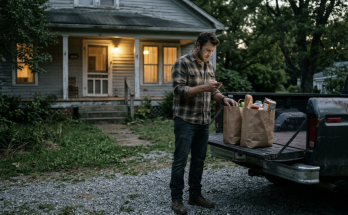
The groceries in my hands.
The closed blinds.
Ranata’s voice explaining how helpless I supposedly was.
I remembered the humiliation I’d felt.
The anger.
The disbelief.
And then I remembered what happened afterward.
The truth came out.
The money was traced.
The lies collapsed.
And the daughter everyone had underestimated finally stopped asking them to see her worth.
That evening, I drove home in my old pickup.
The sunset stretched across the fields, turning the sky gold.
My phone buzzed.
It was Mom.
Fay, would you like to come for Sunday dinner? Your father is making your favorite roast.
I smiled.
Then I typed:
I’ll bring dessert.
A moment later, another message appeared.
And Fay… we’re proud of you.
I stared at those words.
For most of my life, I’d wanted to hear them.
But something had changed.
I no longer needed them to believe in me.
I already believed in myself.
I put the phone away and continued driving.
There was still work to do.
Gardens to plant.
Young farmers to help.
A future to build.
And a life to enjoy without pretending to be anything other than who I was.
Three days after selling my farm for $39 million, I discovered that my sister had spent fifteen years making money from a lie about my poverty.
A year later, I understood something far more valuable than the fortune in my bank account.
My sister spent fifteen years trying to convince everyone I had nothing. But she never understood that the greatest thing I owned wasn’t my farm, my money, or my success. It was the freedom to live without needing anyone else’s approval.
She stole money using my name. She stole years of trust from our family. But there was one thing she could never steal: the woman I’d worked so hard to become.
And that was the one fortune I would never surrender.
THE END.


One Comment on “PART 3- Three days after selling my $39 million farm, I overheard my sister lying about me.”